


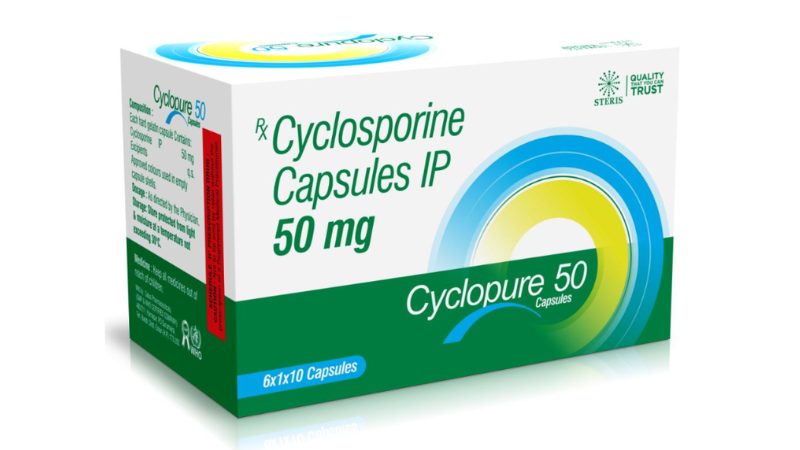



Cyclosporine 50 mg – Uses, Side Effects & Dosage
Sep 19, 2025
What Is Cyclosporine 50 mg Used For?
CYCLOPURE 50 is an immunosuppressive medicine containing 50 mg of cyclosporine in each capsule. It is primarily used to prevent organ rejection after transplantation and to manage autoimmune diseases by reducing the activity of the immune system. Cyclosporine works by inhibiting T-lymphocytes, which are responsible for triggering immune responses and inflammation.
Solid Organ Transplantations
Most common application of cyclosporine 50 mg capsule is transplantation of solid organs. Immune system reaction after kidneys, liver, heart, lungs, and/or pancreatic transplant might lead to rejection when a new organ is attacked by the body's own defense system. Cyclosporine reduces the activity of T-lymphocytes and prevents rejection.
- Prevention of kidney transplant rejection
- Immunosuppression after liver transplant
- Stabilization of heart and lungs transplants
Autoimmune Disorders
CYCLOPURE 50 (cyclosporine 50 mg) is prescribed for severe, refractory autoimmune conditions where conventional therapies fail:
- Rheumatoid Arthritis (RA): Reduces joint inflammation and slows disease progression
- Psoriasis: Controls severe plaque psoriasis unresponsive to topical treatments
- Atopic Dermatitis (Eczema): Rapid remission induction in moderate-to-severe cases
- Crohn's Disease & Ulcerative Colitis: Management of steroid-refractory inflammatory bowel disease
- Nephrotic Syndrome: A primary treatment for steroid-resistant or frequently relapsing nephrotic syndrome
- Uveitis: Management of non-infectious sight-threatening uveitis
Ophthalmologic Use
Cyclosporine 50 mg uses in lower formulations is used globally for dry eye disease (keratoconjunctivitis sicca), as it targets the inflammatory pathway responsible for lacrimal gland dysfunction.
What Are Cyclosporine Drugs Used For?
Cyclosporine drugs, including CYCLOPURE 50 by Steris Healthcare, belong to the class of calcineurin inhibitors. They work by binding to cyclophilin (an intracellular protein), forming a complex that inhibits calcineurin — a phosphatase essential for T-cell activation.
Cyclosporine 50 mg is prescribed for preventing organ rejection in patients who have undergone transplants and for treating autoimmune conditions including rheumatoid arthritis, psoriasis, nephrotic syndrome, and others. This medication suppresses excessive activity of the immune system.
By blocking this pathway, cyclosporine:
- Suppresses IL-2 production (a key cytokine for immune activation)
- Reduces T-lymphocyte proliferation
- Prevents cytokine-mediated inflammatory cascades
Key clinical uses of cyclosporine drugs include:
| Condition | Role of Cyclosporine |
|---|---|
| Organ Transplant | Prevent acute/chronic rejection |
| Psoriasis | Reduce keratinocyte proliferation |
| Rheumatoid Arthritis | Suppress synovial inflammation |
| Atopic Dermatitis | Restore skin barrier, reduce itch |
| Aplastic Anaemia | Restore haematopoiesis |
| Dry Eye Disease | Restore tear production |
| Uveitis | Prevent retinal damage |
| Nephrotic Syndrome | Reduce proteinuria |
Steris Healthcare's cap cyclosporine 50 mg formulation under the brand CYCLOPURE 50 ensures bioequivalent delivery of cyclosporine with consistent absorption for reliable therapeutic outcomes.
Is Cyclosporine Tablet a Steroid?
No — cyclosporine is not a steroid. This is one of the most common misconceptions among patients.
CYCLOPURE 50 (cyclosporine 50 mg) belongs to the class of calcineurin inhibitors, a distinct category of immunosuppressants. While both steroids (like prednisolone) and cyclosporine suppress the immune system, they do so via completely different mechanisms:
Cyclosporine is often introduced to reduce or replace steroid dependency, especially in patients who are steroid-dependent or steroid-intolerant. This makes tab cyclosporine 50 mg a preferred alternative for long-term immunosuppression where steroids would carry unacceptable risks.
Why This Distinction Matters for Patients Cyclosporine 50 mg
Many patients prescribed CYCLOPURE 50 by their physicians worry about "steroid side effects." It is important to clarify that cyclosporine does carry its own side effect profile (detailed below), but steroid-specific effects — such as moon face, buffalo hump, and HPA axis suppression — do not apply to cyclosporine therapy.
Can Cyclosporine Damage Kidneys?
Yes — nephrotoxicity is the most clinically significant risk associated with cyclosporine 50 mg, and it is a major focus of monitoring in patients on long-term therapy.
Types of Cyclosporine-Induced Kidney Injury
1. Acute Nephrotoxicity (Dose-Dependent, Reversible)
- Usually occurs early in treatment or with elevated blood levels
- Characterised by elevated serum creatinine and reduced GFR
- Often reversible with dose reduction
- Appears in approximately 25–38% of transplant recipients
2. Chronic Nephrotoxicity (Structural, Often Irreversible)
- Occurs with prolonged use (typically beyond 12–24 months)
- Involves interstitial fibrosis and tubular atrophy
- May progress to chronic kidney disease (CKD)
- Requires regular monitoring of renal function
Monitoring Protocol Recommended by Steris Healthcare
Patients on CYCLOPURE 50 (cyclosporine 50 mg) should undergo:
- Serum creatinine & BUN — every 2 weeks initially, then monthly
- Blood pressure monitoring — cyclosporine can cause hypertension, worsening renal stress
- Cyclosporine blood trough levels — to keep within therapeutic window (100–300 ng/mL for most indications)
- Urinalysis — protein, casts
Risk Factors That Increase Nephrotoxicity
- Concurrent use of NSAIDs, aminoglycosides, or other nephrotoxic drugs
- Pre-existing renal impairment
- Dehydration or volume depletion
- High-dose or prolonged therapy
Clinical Note: Despite the risk, millions of transplant patients have been maintained safely on cyclosporine for decades with appropriate monitoring. CYCLOPURE 50 by Steris Healthcare is manufactured to pharmaceutical-grade standards to ensure consistent drug levels and reduce unnecessary toxicity peaks.
What Are the Common Side Effects of Cyclosporine?
Understanding the side effect profile is essential for patient compliance and safe use of cyclosporine 50 mg capsule. Steris Healthcare recommends all patients discuss risks with their prescribing physician.
Common Side Effects of Cyclosporine 50 mg
Renal & Cardiovascular
- Nephrotoxicity (kidney damage — see above)
- Hypertension (occurs in up to 50% of transplant patients)
- Oedema (fluid retention)
Metabolic
- Hyperkalemia (raised potassium — avoid potassium supplements)
- Hypomagnesaemia (reduced magnesium levels)
- Hyperuricaemia (raised uric acid, risk of gout)
- Hyperlipidaemia (elevated cholesterol and triglycerides)
- Hyperglycaemia (especially in transplant recipients)
Neurological
- Tremors (fine hand tremors, common especially early in therapy)
- Headache
- Paraesthesia (tingling/numbness in hands or feet)
- In rare cases: seizures, encephalopathy (usually with very high levels)
Dermatological
- Hirsutism (excessive hair growth) — reported in 20–45% of patients
- Gingival hyperplasia (gum overgrowth) — improves with good oral hygiene
- Acne
Gastrointestinal
- Nausea and vomiting (more common on initiation)
- Diarrhoea
- Abdominal discomfort
- Hepatotoxicity (liver enzyme elevation, usually mild)
Immunological
- Increased susceptibility to bacterial, viral, and fungal infections
- Increased risk of lymphoma and skin malignancies with long-term use
How Long Does Cyclosporine Take to Work?
The onset of action of cyclosporine 50 mg depends on the condition being treated, the dose, and individual patient pharmacokinetics.
General Timeline for Different Conditions
Organ Transplant (Rejection Prevention)
- Cyclosporine begins working within 24–48 hours of initiation
- Therapeutic blood trough levels are established within 3–5 days
- Monitoring begins immediately post-transplant
Psoriasis
- Visible improvement typically occurs within 2–4 weeks of initiating cyclosporine 50 mg therapy
- Maximum benefit is usually seen by 8–16 weeks
- Patients with moderate-to-severe psoriasis often experience significant plaque clearance within 3 months
Rheumatoid Arthritis
- Clinical benefit (reduced joint tenderness, swelling, morning stiffness) typically starts within 4–8 weeks
- Full disease-modifying effect may take 3–6 months
Atopic Dermatitis (Eczema)
- Rapid responder: significant itch and skin improvement in 1–2 weeks
- Full remission induction: 6–12 weeks
Nephrotic Syndrome
- Proteinuria reduction can be seen within 4–8 weeks
- Complete remission: 3–6 months
Aplastic Anaemia
- Initial haematological response: 2–4 months
- Full response may require 6–12 months of continued therapy
Key takeaway: CYCLOPURE 50 (cyclosporine 50 mg) is not a quick-fix drug. Patients must adhere to their prescribed regimen and not discontinue treatment prematurely, as this can result in relapse or rejection.
How Long Does Cyclosporine Take to Work for Dry Eyes?
Cyclosporine for dry eye disease (DED) targets the underlying inflammation of the lacrimal gland and ocular surface.
- Initial symptomatic relief: Some patients notice reduced grittiness and discomfort within 4–6 weeks
- Objective improvement (Schirmer test, TBUT): Typically at 3 months
- Full therapeutic benefit: Usually achieved at 6 months of consistent use
- Long-term use: Most ophthalmologists recommend at least 12 months of cyclosporine treatment for sustained DED remission
Factors affecting response in dry eyes:
- Severity of meibomian gland dysfunction
- Concurrent use of artificial tears
- Compliance with dosing schedule
- Baseline tear production levels
Patients using cyclosporine 50 mg systemically (not topically) for secondary dry eyes related to Sjögren's syndrome or GvHD may see improvement on a similar 3–6 month timeline as the systemic inflammatory load is reduced.
Can I Stop Cyclosporine Suddenly?
No — cyclosporine 50 mg should never be stopped abruptly without medical supervision. This is a critical safety warning that Steris Healthcare emphasises for all CYCLOPURE 50 patients.
Risks of Sudden Discontinuation
1. Transplant Rejection For organ transplant recipients, abrupt cessation of cyclosporine can trigger:
- Acute rejection episode within days to weeks
- Potential graft loss
- Need for high-dose corticosteroids or re-transplantation
2. Disease Flare in Autoimmune Conditions
- Psoriasis rebound (often more severe than the original presentation)
- Rheumatoid arthritis flare with significant joint inflammation
- Eczema rebound with worsening skin barrier breakdown
- Nephrotic syndrome relapse with rapid proteinuria return
3. Haemodynamic Rebound
- Rapid blood pressure fluctuations
- Fluid balance disruption
Correct Discontinuation Protocol
Physicians typically recommend a gradual dose tapering — usually reducing by 25% every 2–4 weeks, while monitoring:
- Blood levels of cyclosporine
- Disease activity markers (creatinine, ESR, PASI score, etc.)
- Organ function tests
Never self-discontinue CYCLOPURE 50. Always consult your transplant team, rheumatologist, or dermatologist before making any changes to your cyclosporine regimen.
CYCLOPURE 50 – Dosage, Price & Availability in India
Cyclosporine 50 mg Brand Name
CYCLOPURE 50 is the registered brand name by Steris Healthcare, one of India's trusted pharmaceutical manufacturers offering premium-quality immunosuppressant therapy.
Cyclosporine 50 mg Best Price in India
CYCLOPURE 50 offers patients access to cyclosporine 50 mg at the best price in India without compromising on quality, bioavailability, or manufacturing standards.
- Manufactured under WHO-GMP guidelines
- Available at leading retail pharmacies and hospital dispensaries
- Accessible via licensed online pharmacy platforms in India
For current cyclosporine 50 mg tablet price and bulk/hospital pricing, contact Steris Healthcare directly.
Cyclosporine 50 mg for Dogs
Tab cyclosporine 50 mg is also used in veterinary medicine, particularly for dogs with immune-mediated conditions. This makes CYCLOPURE 50 relevant for both human and veterinary healthcare professionals.
Common Uses of Cyclosporine 50 mg for Dogs
- Atopic dermatitis (canine eczema): The most common indication — reduces pruritus (itching) and skin inflammation
- Keratoconjunctivitis sicca (dry eye disease in dogs)
- Immune-mediated haemolytic anaemia (IMHA)
- Inflammatory bowel disease (IBD) in dogs
- Perianal fistulas: A chronic, painful condition — cyclosporine is first-line therapy
- Lupus and pemphigus (autoimmune skin disease)
Cyclosporine Dosage for Dogs
- Standard dose: 5 mg/kg once daily orally
- Administered with or without food (consistent timing is key)
- Blood monitoring is recommended for dogs on long-term therapy
Side Effects in Dogs
- Vomiting and diarrhoea (common on initiation — give with food)
- Gingival hyperplasia
- Papillomavirus warts
- Increased susceptibility to infections
Note: Always use veterinarian-prescribed cyclosporine formulations for dogs. Human formulations like CYCLOPURE 50 are not intended for veterinary use unless specifically directed by a licensed veterinarian.
Conclusion
CYCLOPURE 50, which consists of cyclosporine 50 mg, is one of the commonly prescribed medications used to inhibit immunity, thereby helping to prevent organ rejection after transplantation and to control various autoimmune diseases and inflammations. The drug helps to prevent rejection of transplanted organs and reduces symptoms of such diseases as psoriasis, rheumatoid arthritis, and nephrotic syndrome due to its inhibiting effect on T-cells. The correct application of CYCLOPURE 50 under the guidance of a doctor will provide effective treatment results.
Frequently Asked Questions (FAQs)
Q1: What is the difference between cap cyclosporine 50 mg and tab cyclosporine 50 mg?
A: Both deliver 50 mg of cyclosporine. Capsules (soft-gel or hard) typically provide better bioavailability due to microemulsion technology, while tablets are solid-dose forms. CYCLOPURE 50 is available as a capsule for optimised absorption.
Q2: Can cyclosporine 50 mg be taken with food?
A: Yes, but consistency is key. Take CYCLOPURE 50 at the same time relative to meals each day to ensure stable blood levels. Grapefruit juice must be avoided as it inhibits CYP3A4 metabolism and can dangerously raise cyclosporine levels.
Q3: Is cyclosporine 50 mg safe during pregnancy?
A: Cyclosporine is FDA Pregnancy Category C. It crosses the placenta and may affect fetal development. Use only if clearly indicated, under strict specialist supervision.
Q4: How should CYCLOPURE 50 be stored?
A: Store below 25°C, away from direct sunlight and moisture. Keep the capsules in the original blister pack until use.
Q5: Can cyclosporine interact with other drugs?
A: Yes — many significant drug interactions exist. Drugs that increase cyclosporine levels: azithromycin, fluconazole, diltiazem, verapamil, grapefruit. Drugs that decrease levels: rifampicin, carbamazepine, phenytoin. Always inform your doctor of all medications being taken.
Recent Post
Rabeprazole Gastro Resistant Tablet IP 20 mg: Uses, Benefits, Dosage & Side Effects
Duloxetine 20 mg Uses in Hindi: फायदे, नुकसान और काम करने का तरीका
Silodosin Capsules 8mg Uses in Hindi | पूरी जानकारी
Rivaroxaban 20 mg – Blood Thinner Uses, Dosage & Safety Guide
povidone iodine ointment usp uses in hindi:पोविडोन आयोडीन ऑइंटमेंट USP के फायदे, उपयोग विधि और सावधानियां

Clobetasol Neomycin Miconazole Cream – TOPBETA GM 20
sitagliptin 100 mg uses in hindi Sitagliptin 100 mg Uses in Hindi: पूरी जानकारी
Famciclovir: Uses, Dosage, Side Effects & Price Guide
Cilostazol Tablet: Uses, Price, Dosage & Side Effects Explained

Prebiotic and Probiotic Capsules Uses in Hindi: उपयोग, फायदे, खुराक, साइड इफेक्ट्स और सावधानियां