





Prednisolone Acetate Ophthalmic Suspension: Uses, Benefits & Where to Buy
Jul 25, 2026
Eye inflammation doesn't wait for a convenient time. Whether it's post-surgery swelling or a flare-up of uveitis, most people end up staring at a prescription bottle wondering what's actually in it. That's usually when prednisolone acetate ophthalmic suspension shows up on the label — and the name alone is enough to send anyone straight to Google.
This guide breaks down exactly what prednisolone acetate ophthalmic suspension USP is, how it works, who it's prescribed for, what to expect, and how to source it safely — including through Cipvision Prednisolone 1%, without wading through pages of clinical jargon.
Key Takeaways
- Prednisolone acetate ophthalmic suspension is a corticosteroid eye drop used to treat inflammation from surgery, injury, or eye conditions like uveitis.
- It's available by prescription only in most countries, including the US and India.
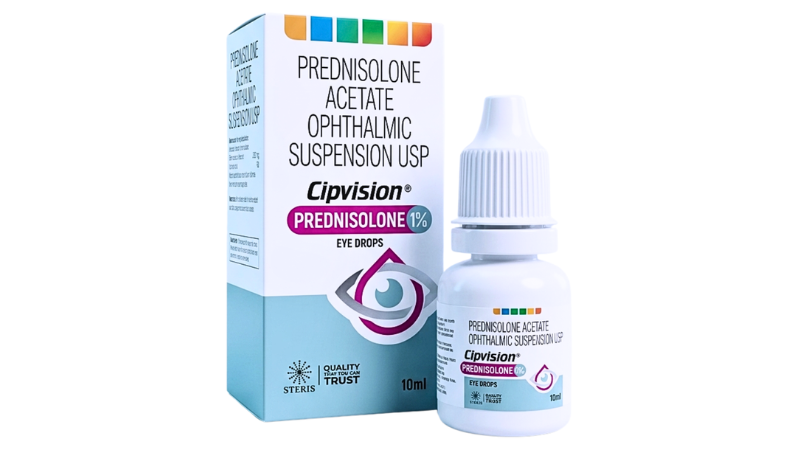
- Cipvision Prednisolone 1% delivers prednisolone acetate ophthalmic suspension USP 1% in a shake-well formulation.
- It must be shaken well before each use — the suspension separates when it sits.
- Extended or unsupervised use raises the risk of increased eye pressure and cataracts, so ophthalmologist follow-up matters.
What Is Prednisolone Acetate Ophthalmic Suspension?
Prednisolone acetate ophthalmic suspension is a corticosteroid eye drop that reduces inflammation, redness, and swelling in the eye. It's typically prescribed after eye surgery or to manage inflammatory eye conditions such as uveitis and iritis.
The "USP" in prednisolone acetate ophthalmic suspension USP simply means the formulation meets United States Pharmacopeia standards for purity and potency — a quality benchmark, not a different drug. Cipvision Prednisolone 1% is manufactured to this USP standard, delivered as a 1% suspension, meaning the drug particles are dispersed in liquid rather than fully dissolved. That's exactly why the bottle needs a good shake before every dose — skip that step and you're basically applying diluted water instead of medicine.
Prednisolone acetate belongs to a drug class called ophthalmic corticosteroids, chemically related to cortisol, the hormone your adrenal glands naturally produce to regulate inflammation.
What Is Prednisolone Acetate Ophthalmic Suspension Used For?
Doctors prescribe prednisolone acetate ophthalmic suspension mainly for post-operative inflammation and non-infectious inflammatory conditions affecting the front of the eye.
Common uses include:
- Post-cataract or post-LASIK surgery inflammation — the most frequent reason it's prescribed
- Uveitis — inflammation of the eye's middle layer (the uvea)
- Iritis — inflammation specific to the iris
- Allergic conjunctivitis flare-ups that haven't responded to milder treatments
- Chemical or thermal burns to the eye, once infection has been ruled out
It's worth noting this medication does not treat eye infections on its own. If bacteria, fungi, or a virus caused the inflammation, a steroid alone can actually make things worse by suppressing the immune response that's fighting the infection. That's why ophthalmologists often rule out infection first, or pair it with an antibiotic when needed.
Prednisolone Acetate Ophthalmic Suspension USP Uses in Post-Surgical Care
After procedures like cataract removal, some swelling is expected as part of the eye's natural healing response. Left unmanaged, that inflammation can slow recovery or affect vision clarity.
Surgeons commonly build a tapering schedule — starting with more frequent drops and gradually reducing over several weeks. This tapering approach isn't arbitrary; stopping steroid drops abruptly after surgery has been linked to rebound inflammation in some patients, which is why ophthalmologists are strict about follow-up visits.
How Does Prednisolone Acetate Work in the Eye?
Prednisolone acetate works by suppressing the body's inflammatory response at a cellular level, reducing the release of chemicals that cause swelling, redness, and discomfort.
Once applied, the suspension coats the eye's surface and gets absorbed through the cornea. Inside eye tissue, it inhibits phospholipase A2, an enzyme that kicks off the inflammatory cascade. Fewer inflammatory mediators means less swelling, less redness, and generally faster comfort — though "faster" here means days, not hours.
This is a slower-acting anti-inflammatory compared to something like an NSAID eye drop, but its effect on ocular inflammation tends to be stronger, which is exactly why it's reserved for more significant inflammation rather than routine allergy symptoms.
Prednisolone Acetate Eye Drops: How to Use Them Correctly
Getting the technique right matters almost as much as getting the prescription right — a poorly administered dose is functionally a missed dose.
- Wash your hands before touching the bottle or your eye.
- Shake the Cipvision Prednisolone 1% bottle vigorously for several seconds — this is not optional with a suspension.
- Tilt your head back and pull down the lower eyelid to form a small pocket.
- Instill the prescribed number of drops without letting the dropper tip touch your eye or eyelid.
- Close your eye gently for 1–2 minutes and apply light pressure near the tear duct to limit systemic absorption.
- Wait at least 5–10 minutes before applying any other eye medication.
Your ophthalmologist sets the exact dosing frequency and duration based on your specific condition — this can range widely depending on severity, so there's no universal schedule to follow here. Always use it exactly as prescribed, and never adjust frequency or stop early without checking in, since abrupt discontinuation has been associated with rebound flare-ups.
Prednisolone Acetate Ophthalmic Suspension Side Effects
Most people tolerate this medication well when used as directed, but corticosteroid eye drops do carry a distinct side effect profile compared to regular eye drops.
Common, usually mild:
- Temporary stinging or burning on application
- Blurred vision right after instilling the drop
- Increased light sensitivity
Less common, but require monitoring:
- Elevated intraocular pressure (steroid-induced ocular hypertension)
- Delayed wound healing
- Increased susceptibility to eye infections
- Cataract formation with long-term use
This is exactly why prednisolone acetate ophthalmic suspension isn't a drop you self-manage indefinitely. Ophthalmologists typically schedule pressure checks during extended courses, particularly for patients using it beyond a few weeks or those with a personal or family history of glaucoma.
Who Should Avoid Prednisolone Acetate Ophthalmic Suspension?
This medication isn't right for everyone, and a few groups need extra caution before starting it.
It's generally avoided or used with close supervision in people with:
- Active untreated eye infections (bacterial, viral — especially herpes simplex keratitis, fungal)
- Known hypersensitivity to corticosteroids or any suspension ingredients
- Glaucoma or elevated eye pressure history
- Recent eye injury involving a perforation
Pregnant or breastfeeding patients should discuss risks with their doctor, since ophthalmic corticosteroids do have some systemic absorption, even though it's minimal compared to oral or injectable steroids.
Where to Buy Cipvision Prednisolone 1%
Prednisolone acetate ophthalmic suspension is a prescription-only medication in most markets, including the United States and India, so Cipvision Prednisolone 1% can't legally be purchased without a valid prescription from a licensed physician or ophthalmologist.
Once you have a prescription, you have a few legitimate options:
- Local licensed pharmacies — the most straightforward route, especially if you need it same-day
- Hospital or clinic pharmacies — often stock it directly if you've just had eye surgery
- Licensed online pharmacies, which verify prescriptions before dispensing and ship with proper cold-chain handling where required
A quick word of caution: be wary of any site offering Cipvision Prednisolone 1% or similar products without asking for a prescription. Beyond the legal issue, unregulated sources can't guarantee the suspension was stored or transported correctly, and a corticosteroid that's degraded from heat exposure isn't going to do your eye any favors.
Prednisolone Acetate Ophthalmic Suspension vs. Other Steroid Eye Drops
Not all steroid eye drops are interchangeable, and the differences come down to potency and how deep into eye tissue they penetrate.
| Feature | Prednisolone Acetate (Cipvision 1%) | Prednisolone Sodium Phosphate | Loteprednol |
| Form | Suspension | Solution | Suspension/gel |
| Corneal penetration | Higher | Lower | Moderate |
| Relative potency | High | Moderate | Lower |
| Typical use | Post-surgery, uveitis |
Milder inflammation |
Long-term, lower IOP risk |
Prednisolone acetate's suspension form actually helps it penetrate the cornea more effectively than the sodium phosphate solution version, which is part of why it's favored for more serious inflammation like post-cataract swelling or uveitis.
Conclusion
Prednisolone acetate ophthalmic suspension does one job well: it calms down inflammation that your eye can't manage on its own, whether that's from surgery or a flare-up like uveitis. It's effective, but it's also a medication that needs a doctor's oversight, not guesswork — the risks around eye pressure and cataracts are real enough that self-adjusting dosing just isn't worth it.
If you've been prescribed this medication, get Cipvision Prednisolone 1% from a source that actually checks your prescription and handles it correctly. Have a prescription in hand? Reach out to a licensed pharmacy to get it fulfilled safely and quickly.
| Attribute | Details |
| Product Name | Cipvision Prednisolone 1% |
| Composition | Prednisolone Acetate Ophthalmic Suspension USP 1% |
| Pack Size | 1 Bottle (5 ml / 10 ml — confirm your fill volume) |
| Price | ₹43 per bottle |
| Form | Ophthalmic Suspension |
| Usage | Post-surgical inflammation, uveitis, iritis, allergic conjunctivitis |
| Prescription | Required (Rx only) |
| Storage | Store below 25°C, protect from light, shake well before use |
| Manufacturer | Steris Healthcare |
Frequently Asked Questions
What is Cipvision Prednisolone 1% used for?
It's a prednisolone acetate ophthalmic suspension used to treat inflammation in the eye caused by surgery, injury, or conditions like uveitis and iritis. It reduces swelling, redness, and discomfort but doesn't treat underlying infections.
How long does it take for Cipvision Prednisolone 1% to work?
Most patients notice reduced redness and discomfort within a few days, though full resolution of inflammation can take one to several weeks depending on severity. Your doctor will typically schedule a follow-up to check progress and adjust the tapering schedule.
Can I use Cipvision Prednisolone 1% without a prescription?
No. It's classified as a prescription-only medication because of its side effect profile, including the risk of increased eye pressure and cataract formation with prolonged use. A licensed doctor needs to confirm it's appropriate for your specific eye condition first.
Why do I need to shake the bottle before use?
Because it's a suspension, not a solution, the active drug particles settle at the bottom over time. Shaking redistributes them evenly through the liquid, so skipping this step means you could be applying an inconsistent, weaker dose.
Is Cipvision Prednisolone 1% the same as Pred Forte?
Both are prednisolone acetate ophthalmic suspension 1% — the active ingredient and mechanism are identical. The difference comes down to manufacturer, pricing, and sometimes minor formulation details like preservatives.
What happens if I stop using it too early?
Stopping abruptly, especially after surgery, can trigger rebound inflammation — meaning the swelling and redness can return, sometimes worse than before. That's why doctors usually prescribe a gradual taper rather than an abrupt stop.
Recent Post
Teneligliptin 20 mg Uses – A Complete Guide to Type 2 Diabetes Control
CONARIS 100 (इट्राकोनाजोल कैप्सूल 100mg) उपयोग और सावधानियां हिंदी में
Ursodeoxycholic Acid Tablet Uses in Hindi | फायदे, खुराक और साइड इफेक्ट्स
Rabeprazole Gastro Resistant Tablet IP 20 mg: Uses, Benefits, Dosage & Side Effects
Duloxetine 20 mg Uses in Hindi: फायदे, नुकसान और काम करने का तरीका
Silodosin Capsules 8mg Uses in Hindi | पूरी जानकारी
Rivaroxaban 20 mg – Blood Thinner Uses, Dosage & Safety Guide
povidone iodine ointment usp uses in hindi:पोविडोन आयोडीन ऑइंटमेंट USP के फायदे, उपयोग विधि और सावधानियां
Clobetasol Neomycin Miconazole Cream – TOPBETA GM 20
sitagliptin 100 mg uses in hindi Sitagliptin 100 mg Uses in Hindi: पूरी जानकारी