


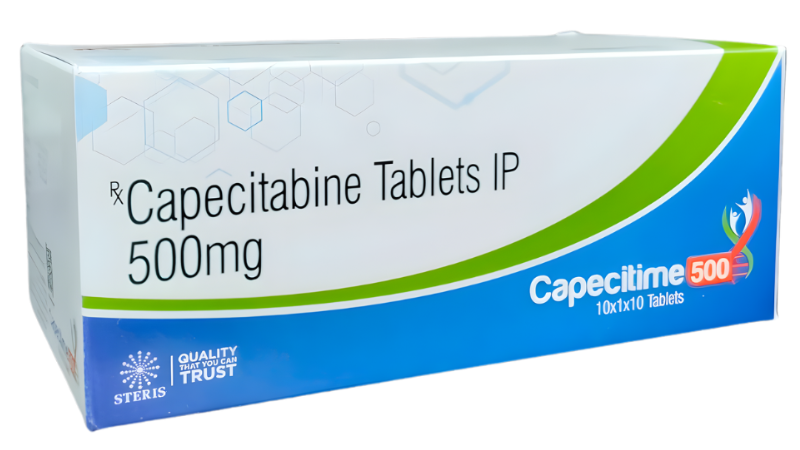



Capecitabine 500mg
Nov 02, 2022
What Is Capecitabine 500 mg Tablet?
Capecitabine 500 mg tablets - an antineoplastic prodrug an antineoplastic prodrug to treat patients with colorectal cancer, stomach cancer, gastroesophageal junction cancers, and breast cancer. It's a non-active oral form; when ingested, the drug first progresses through the enzymes in the liver and eventually converts to become capecitabine's active metabolite, 5-fluorouracil, which damages and kills cancer cells by blocking the making of DNA & RNA in those cancer cells.
Capecitabine falls into the family of antimetabolite chemotherapy drugs, which also includes 5- FU as well. There are literally dozens of different brand names, where the active ingredient capecitabine (of strength 500 mg) is from various manufacturers - Capctime 500 mg, Xeloda 500 mg, Capecite, Capsy 500mg, Capegard 500mg, Capecet, Capetero, and so on. The above just listed few most common brands out of the many available brands in the Indian market.
What Is Capecitabine 500 mg Tablet Used For?
Capecitabine 500 mg tablet is primarily used to treat colorectal cancer and breast cancer, either alone or combined with other chemotherapy drugs. Oncologists prescribe it for several specific situations:
- Adjuvant treatment of Dukes' C colon cancer — given after surgical removal of the tumor, to reduce the chance the cancer returns.
- First-line treatment of metastatic colorectal cancer — cancer that has spread beyond the colon or rectum.
- Metastatic breast cancer — particularly when the cancer has stopped responding to paclitaxel and anthracycline-based chemotherapy, or when anthracyclines aren't suitable.
- Gastric and gastroesophageal junction (GEJ) cancer — often in advanced or metastatic stages.
- Pancreatic adenocarcinoma — sometimes used post-surgery to lower recurrence risk.
It's frequently combined with other agents such as oxaliplatin (the CAPOX/XELOX regimen) or radiotherapy, depending on the cancer type and stage — decisions that rest entirely with the treating oncologist.
Capecitabine 500 mg Tablet Price in India
Capecitabine 500 mg tablet price in India generally ranges from about ₹100 to ₹1,200+ per strip of 10 tablets, with the wide gap driven by brand, manufacturer, and whether it's a generic or branded version.
Based on current pharmacy and marketplace listings, here's how pricing typically breaks down:
| Price Band | Examples | Approx. Price (10 tablets) |
|---|---|---|
| Budget generics | Capamed 500, Capegard 500, Capetero 500 | ₹250 – ₹400 |
| Mid-range brands | Capecite 500, Capsy 500, CAPECITIME 500 | ₹550 – ₹750 |
| Premium/originator | Xeloda 500 (Roche), Pro 5 500 | ₹900 – ₹1,200+ |
For instance, CAPECITIME 500 Tablet (10 units, manufactured by Steris Healthcare) carries an MRP of roughly ₹1,217, but is commonly sold at a discounted price around ₹730 per strip on licensed online pharmacies — working out to about ₹73 per tablet. This reflects standard MRP-to-online-discount patterns seen across most Indian e-pharmacy platforms, so always check the current listed price at checkout since MRPs and discounts change periodically.
Why does capecitabine price vary so much between brands?
A few factors explain the spread:
- Manufacturer and brand positioning — originator brands (like Xeloda) typically cost more than generic equivalents with the same active ingredient.
- Formulation — dispersible tablets or capsule forms may be priced differently from standard tablets.
- Pack size — strips of 8, 10, or larger hospital packs affect per-unit cost.
- Platform discounts — online pharmacies often list a lower "selling price" against a higher printed MRP.
Because full treatment courses often require multiple strips across several weeks, even small per-strip price differences add up meaningfully over a treatment cycle — which is why patients and caregivers frequently compare capecitabine 500mg tablet price across brands before purchase, always through a licensed pharmacy against a valid prescription.
How Should Capecitabine 500 mg Tablet Be Taken?
Capecitabine tablets should be swallowed whole with water, generally within 30 minutes after a meal, and never crushed or chewed. Taking it with food helps steady the absorption rate.
Dosing is highly individualized. It isn't a flat "one tablet twice a day" drug — oncologists calculate the dose based on body surface area (height and weight), kidney and liver function, the specific cancer being treated, and whether it's combined with other therapies. Treatment typically follows a cycle pattern: a set number of days on the medicine, followed by a rest period, repeated over several cycles.
Practical points patients should know:
- Never adjust the dose yourself, even if you feel fine or feel unwell — contact your oncology team.
- If you miss a dose, take it as soon as you remember unless it's almost time for the next one; don't double up.
- If you accidentally take too much, symptoms like diarrhea and fatigue may appear — inform your doctor immediately rather than waiting it out.
Foods to Avoid with Capecitabine
There's no specific list of "forbidden foods" tied to capecitabine's mechanism, but a few practical eating habits matter during treatment:
- Take it with food, consistently — capecitabine should be taken within about 30 minutes after a meal, since food affects how much of the drug your body absorbs. Try to be consistent (e.g., always after breakfast and dinner) rather than sometimes fasting and sometimes not.
- Be cautious with raw or undercooked food — like many chemotherapy drugs, capecitabine can lower your resistance to infection, so many oncology teams recommend avoiding raw seafood, undercooked meat/eggs, and unpasteurized dairy during active treatment.
- Stay hydrated — since diarrhea is a common side effect, keeping up fluid and electrolyte intake matters more than any specific food restriction.
- Grapefruit and grapefruit juice — commonly flagged with many oral cancer drugs due to interactions with liver enzymes; it's reasonable to ask your pharmacist whether it's a concern for your specific regimen.
As always, your treating team may layer additional dietary advice on top of this depending on your specific cancer and any combination drugs you're on.
How Long Do I Take Capecitabine? (Treatment Schedule)
Capecitabine is almost always given in repeating cycles — commonly 14 days on the tablet followed by a 7-day rest period, making one 21-day cycle — though the exact schedule and total number of cycles depends on your specific cancer. Treatment is usually delivered as a course of several cycles, most often three weeks long, though the exact length depends on the cancer being treated. Some patients take capecitabine daily for a few months rather than in the standard 2-week-on/1-week-off pattern, again depending on the treatment plan your oncologist has designed.
A typical cycle looks like this:
- Days 1–14: Tablets taken twice daily, roughly 12 hours apart, after meals.
- Days 15–21: Rest period — no capecitabine.
- Before each new cycle: Blood tests confirm your blood counts have recovered enough to continue safely.
The total number of cycles varies — some regimens run for 4 cycles, others for 6–8, and maintenance regimens in certain cancers can continue for many months. This is entirely individualized, so "how long will I be on this" is a question best answered by your treating oncologist based on your specific protocol.
What Are the Side Effects of Capecitabine 500 mg Tablet?
The most commonly reported side effects of capecitabine include diarrhea, nausea, vomiting, abdominal pain, fatigue, and hand-foot syndrome. Hand-foot syndrome specifically causes redness, swelling, and tenderness on the palms and soles — a hallmark side effect of this drug class.
Most of these effects are manageable and often resolve once the medicine is stopped or the dose adjusted, but they should never be dismissed:
- Nausea and vomiting — taking the tablet after meals, as directed, helps reduce this.
- Diarrhea — staying well hydrated is important; persistent or severe diarrhea needs prompt medical attention.
- Hand-foot syndrome — keeping hands and feet moisturized and avoiding excessive friction or heat can ease discomfort, but your doctor should be informed if it worsens.
- Increased bilirubin/liver enzyme changes — routine blood monitoring during treatment helps catch this early.
Serious side effects that need immediate medical attention include signs of severe infection, unusual bleeding or bruising (especially if you're also on blood thinners like warfarin), chest pain, or severe, unrelenting diarrhea — all of which should be reported to the treating oncologist right away rather than managed at home.
Who Should Avoid Capecitabine 500 mg Tablet?
Capecitabine should not be used during pregnancy or breastfeeding, and requires caution or dose adjustment in people with liver impairment, significant kidney impairment, heart disease, or a rare enzyme deficiency called DPD deficiency.
Key precautions:
- Pregnancy: Capecitabine can harm a developing fetus; effective contraception is generally advised during and after treatment.
- Breastfeeding: It's unknown whether the drug passes into breast milk, so it's avoided as a precaution.
- Kidney function: Patients with a creatinine clearance below 50 mL/min may need dose reductions.
- Liver function: Those with mild-to-moderate liver impairment need closer monitoring for adverse reactions.
- Heart disease: Capecitabine can occasionally trigger cardiotoxicity, including angina-like symptoms, particularly in those with existing coronary artery disease.
- DPD enzyme deficiency: People who lack normal dihydropyrimidine dehydrogenase (DPD) activity are at markedly higher risk of severe, sometimes life-threatening, drug toxicity — this is why some oncologists now request DPD or genetic testing before starting treatment.
- Age: Elderly patients, especially those over 70, are more prone to side effects and are usually monitored more closely.
- Children: Not recommended for anyone under 18 without specialist guidance.
Capecitabine also interacts with several other drugs — notably blood thinners like warfarin (increased bleeding risk), anti-seizure medication like phenytoin (increased phenytoin levels), and gout medicines like allopurinol (which can reduce capecitabine's effectiveness). Always share your full medication list with your oncologist before starting treatment.
Will I Lose My Hair on Capecitabine?
Hair thinning is possible but capecitabine causes less hair loss than many IV chemotherapy drugs — it's not a universal side effect the way it is with some other regimens, though it can occur, especially when combined with other agents. If you're on a combination regimen (like capecitabine plus a taxane or anthracycline), expect more hair loss to come from the IV drug than from capecitabine itself. Any hair loss from chemotherapy in general is usually temporary, regrowing once treatment ends.
Capecitabine 500 mg Tablet vs. CAPECITIME 500: What's the Difference?
CAPECITIME 500 is simply one branded formulation of capecitabine 500 mg — the active ingredient, mechanism, uses, and precautions are identical to any other capecitabine tablet, but the manufacturer, pricing, and excipients may differ slightly.
CAPECITIME 500, manufactured by Steris Healthcare (marketed via platforms like Truemeds), is used for the same indications discussed above: Dukes' C colon cancer (adjuvant setting), metastatic colorectal cancer, and treatment-resistant metastatic breast cancer. Like all capecitabine brands, it requires a valid prescription, and switching between brands should only be done with your oncologist's or pharmacist's input, since bioavailability can vary slightly between generic manufacturers.
If your prescription simply says "capecitabine 500 mg," your pharmacist can typically offer several brand options — including CAPECITIME 500 — at different price points, all delivering the same active drug.
A Final Word
Capecitabine 500 mg tablet is a genuinely important drug in modern oncology — it's part of standard treatment protocols for colorectal, breast, and gastric cancers worldwide, and its oral form (versus IV chemotherapy) has made cancer treatment more manageable for many patients. But it's also a potent chemotherapy agent with real risks if mismanaged. Whether you're looking at CAPECITIME 500 or another brand, the safest path is always the same: get it from a licensed pharmacy, only against a valid prescription, and never adjust the dose or brand without checking with your oncology team first.
If you have a valid prescription and want to compare current pricing across capecitabine brands including CAPECITIME 500, your pharmacist or a licensed online pharmacy can show you real-time stock and pricing — but the treatment decision itself should always sit with your oncologist.
Frequently Asked Questions
What is capecitabine 500 mg tablet used for?
It's used to treat colorectal cancer, metastatic breast cancer, gastric cancer, and sometimes pancreatic cancer, usually as part of a broader chemotherapy plan directed by an oncologist.
Is capecitabine 500 mg tablet available without a prescription?
No. Capecitabine is a scheduled prescription chemotherapy drug in India and cannot legally be purchased without a valid prescription from a registered doctor.
What is the capecitabine 500 mg tablet price in India?
Prices generally range from around ₹100 to over ₹1,200 for a strip of 10 tablets, depending on the brand — for example, CAPECITIME 500 is typically priced around ₹700–₹730 per strip after standard online pharmacy discounts.
Can capecitabine be taken on an empty stomach?
It's not recommended. Capecitabine is usually taken within 30 minutes after a meal, since food affects how the drug is absorbed and helps reduce nausea.
What are the most common side effects of capecitabine?
Diarrhea, nausea, vomiting, fatigue, abdominal pain, and hand-foot syndrome (redness and swelling of palms and soles) are the most frequently reported side effects.
Can I switch between different capecitabine brands like Xeloda, Capecite, or CAPECITIME 500?
Only with your oncologist's or pharmacist's approval. While the active ingredient is the same, switching brands mid-treatment should be a clinical decision, not a self-directed one.
Recent Post
Luliconazole Lotion: उपयोग, फायदे और सावधानियां पूरी जानकारी
Luliconazole Shampoo कैसे काम करता है? जानें उपयोग और फायदे
Luliconazole और Pramoxine Hydrochloride की संपूर्ण गाइड
Luliconazole Cream क्या है? जानें उपयोग, फायदे और साइड इफेक्ट्स
Luliconazole Cream IP 1% w/w: उपयोग, फायदे और सावधानियां पूरी जानकारी
Tolperisone Hydrochloride & Paracetamol Tablets: Uses, Benefits, Dosage & Side Effects
Tolperisone Hydrochloride Uses in Hindi: फायदे, खुराक, साइड इफेक्ट्स और सावधानियां
Hydroxyzine hydrochloride tablet uses in hindi : हाइड्रोक्सीज़ाइन हाइड्रोक्लोराइड टैबलेट उपयोग व लाभ | Steris
Bisoprolol 2.5 mg for High Blood Pressure & Angina: Benefits, Dosage & Precautions
Methotrexate Tablets की संपूर्ण गाइड: उपयोग से लेकर सावधानियों तक