





Polyvinyl Alcohol and Povidone Eye Drops: Uses, Benefits, Side Effects & Price
Aug 10, 2026
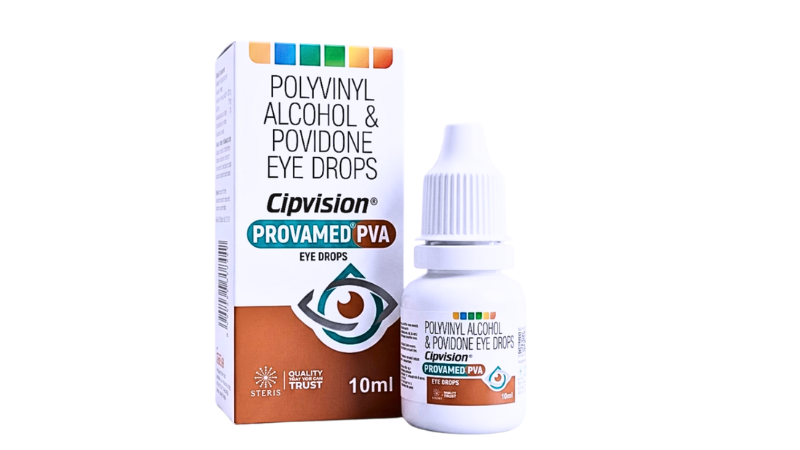
CIPVISION PROVAME PVA, composed of polyvinyl alcohol and povidone, active ingredients used together in ophthalmic solutions (eye drops) to lubricate the eye and treat dry, irritated eyes. Unlike medicated eye drops that treat infection or inflammation, this is an artificial tears formulation — it works by coating the surface of the eye with a thin, moisture-retaining film that mimics the natural tear layer. It's commonly reached for by people who spend long hours on screens, wear contact lenses, live in dry or air-conditioned environments, or simply experience occasional eye dryness. CIPVISION PROVAME PVA is available over-the-counter, is manufactured under WHO-GMP and ISO-certified conditions, and offers fast, gentle relief with minimal side effects when used as directed. This guide covers what polyvinyl alcohol and povidone eye drops are used for, how they work, their benefits, potential side effects, dosage guidance, and answers to the most commonly searched questions about this product.
Why It's Important: Understanding Dry Eye and the Role of Lubricant Drops
Your eyes rely on a constant, thin layer of tears to stay comfortable, clear, and protected. This tear film isn't just water — it's a carefully balanced mix of oils, water, and mucus that keeps the eye surface smooth and shields it from dust, wind, and everyday irritants. When tear production drops, or when tears evaporate too quickly — which happens easily with prolonged screen time, air conditioning, pollution, or contact lens wear — the eye surface becomes dry, inflamed, and uncomfortable.
This is where polyvinyl alcohol and povidone eye drops become genuinely important. Left unmanaged, chronic dryness can lead to more than just discomfort — it can cause blurred vision, increased sensitivity to light, a persistent gritty or burning sensation, and in some cases, surface damage to the cornea over time. CIPVISION PROVAME PVA is formulated specifically to restore that missing moisture layer, giving the eye's natural healing and lubrication process the support it needs, especially for people whose daily habits or environment put extra strain on their eyes.
Polyvinyl Alcohol and Povidone Eye Drops
CIPVISION PROVAME PVA combines two well-established ophthalmic demulcents:
- Polyvinyl Alcohol (PVA): A water-soluble polymer that increases the viscosity of the tear film, helping it stay on the eye's surface longer instead of draining away or evaporating quickly. It also has mild wetting properties that help the drop spread evenly across the cornea.
- Povidone (Povidone K-30 / PVP): Works alongside polyvinyl alcohol to further enhance moisture retention and lubrication, giving the formulation a smoother, more comfortable feel on instillation while helping protect against further dryness-related irritation.
How Polyvinyl Alcohol and Povidone Eye Drops Work
When instilled, polyvinyl alcohol and povidone eye drops spread across the surface of the eye and form a thin, uniform, moisture-retentive film. Polyvinyl alcohol's higher viscosity slows down the natural evaporation and drainage of the tear film, meaning the eye stays lubricated for a longer stretch of time between blinks. Povidone complements this by improving the spreadability and comfort of the film, reducing the friction between the eyelid and the eye surface during blinking — which is often the source of the gritty, "sand in the eye" feeling associated with dryness.
Because this mechanism is purely lubricating and protective — rather than pharmacologically active against inflammation or infection — polyvinyl alcohol and povidone eye drops are considered safe for frequent, as-needed use in most healthy individuals, and are widely used as first-line relief for mild to moderate dry eye symptoms.
Key Benefits of CIPVISION PROVAME PVA
What Are the Benefits of Polyvinyl Alcohol and Povidone Eye Drops?
- Fast relief from dryness and irritation — the lubricating film forms almost immediately upon instillation
- Reduces burning, stinging, and gritty sensations caused by tear film instability
- Supports contact lens wearers by supplementing natural tears that lenses can disrupt
- Eases digital eye strain symptoms linked to reduced blink rate during prolonged screen use
- Protects the eye surface from further irritation caused by wind, dust, air conditioning, or pollution
- Gentle, preservative-conscious formulation suitable for frequent daily use in most users
- Non-blurring, comfortable application that doesn't typically interfere with daily activities
- Manufactured under WHO-GMP and ISO-certified standards by Steris Healthcare for consistent quality and safety
Side Effects
Polyvinyl alcohol and povidone eye drops are generally very well tolerated, since they are lubricants rather than active pharmacological agents. However, some users may experience mild reactions.
Common, Usually Mild Side Effects:
- Temporary blurred vision immediately after application
- Mild stinging or a brief sensation of eye irritation on instillation
- Slight eye redness
- A feeling of heaviness or stickiness around the eyelids in rare cases
Serious Side Effects Of Polyvinyl Alcohol and Povidone Eye Drops
While rare, discontinue use and consult a doctor if you experience:
- Persistent eye pain that doesn't resolve after a few minutes
- Significant vision changes that don't clear on their own
- Signs of an allergic reaction — swelling, itching, or rash around the eyes
- Worsening redness or discharge, which may indicate an underlying infection rather than simple dryness
- Any symptom that continues or worsens beyond 72 hours of regular use
Available Substitute for CIPVISION PROVAME PVA
| Composition Type | Function | Example Use Case |
|---|---|---|
| Carboxymethylcellulose (CMC) eye drops | Lubricant, longer retention time | Moderate to severe dry eye |
| Hydroxypropyl methylcellulose (HPMC) | Lubricant, thickening agent | General dryness relief |
| Sodium hyaluronate eye drops | Advanced moisture retention, mucoadhesive | Chronic dry eye, post-surgical dryness |
| Polyethylene glycol (PEG)-based drops | Combination lubricant | Mixed dryness and evaporative symptoms |
| Polyvinyl alcohol and povidone (CIPVISION PROVAME PVA) | Dual-action lubrication and comfort | Mild to moderate everyday dryness |
Dosage Guidelines for CIPVISION PROVAME PVA
- Typical use: 1–2 drops in the affected eye(s), as needed for dryness or irritation
- Frequency: Can generally be used multiple times a day; check the product label or consult your doctor for the maximum recommended frequency
- Application tips: Tilt your head back slightly, pull down the lower eyelid, instill the drop without letting the dropper tip touch the eye or eyelid, then blink gently to spread the solution
- Contact lens users: If applicable, remove lenses before application unless the product is specifically labelled safe for use with lenses in place; wait as directed before reinserting
- Duration: Can be used as ongoing comfort relief; if symptoms don't improve within a few days of regular use, consult an eye specialist
Precautions & Warnings
- For external ophthalmic use only — do not ingest
- Do not touch the dropper tip to the eye, eyelid, or any surface to avoid contamination
- Discontinue use and consult a doctor if you experience persistent pain, vision changes, or worsening redness
- Keep the cap tightly closed when not in use and store as directed on the label
- Do not use if the solution has changed color or become cloudy
- Not a substitute for professional evaluation if dryness is severe, chronic, or accompanied by other symptoms like pain or discharge
- Consult your doctor before use if you have an existing eye condition, are on other eye medications, or have recently had eye surgery
- Keep out of reach of children
- Do not share your eye drop bottle with others to avoid cross-contamination
Conclusion
Polyvinyl alcohol and povidone eye drops, offered under Steris Healthcare's CIPVISION PROVAME PVA, provide a simple, effective, and gentle solution for one of the most common everyday eye complaints—dryness and irritation. Whether it's from long hours in front of a screen, contact lens wear, air-conditioned environments, or general exposure to dust and pollution, this dual-action lubricant formulation helps restore comfort by supplementing the eye's natural tear film. While generally very safe for regular use, persistent or worsening symptoms should always be evaluated by an eye care professional rather than managed indefinitely with over-the-counter drops alone. Manufactured under WHO-GMP and ISO-certified quality standards, CIPVISION PROVAME PVA is a dependable choice for everyday eye comfort—check the current price and stock up for reliable relief whenever dryness strikes.
Frequently Asked Questions
1. What is CIPVISION PROVAME PVA used for?
CIPVISION PROVAME PVA, made of polyvinyl alcohol and povidone, is used to relieve dryness, irritation, burning, and grittiness in the eyes by supplementing the natural tear film.
2. What are polyvinyl alcohol and povidone eye drops used for?
They are used as lubricant "artificial tears" to relieve dry eye symptoms caused by screen use, contact lenses, air conditioning, wind, dust, or general environmental dryness.
3. How often can I use polyvinyl alcohol and povidone eye drops?
They can generally be used multiple times a day as needed for dryness relief, though you should follow the specific frequency on the product label or your doctor's advice.
4. Are polyvinyl alcohol and povidone eye drops safe for daily use?
Yes, for most healthy individuals they are considered safe for regular daily use since they act as lubricants rather than medicated treatments, but persistent symptoms should be checked by a doctor.
5. Can contact lens wearers use CIPVISION PROVAME PVA?
Yes, many users with contact lenses use lubricant drops like this to relieve dryness caused by lens wear, but check the label for lens-compatibility instructions or ask your eye doctor.
6. Is polyvinyl alcohol eye drops the same as regular eye drops?
No, polyvinyl alcohol eye drops are specifically lubricant "artificial tears" formulated to relieve dryness, unlike medicated eye drops used for infections, allergies, or glaucoma.
7. How quickly do polyvinyl alcohol and povidone eye drops work?
Relief is typically felt almost immediately after application, as the lubricating film forms on the eye surface right away.
8. Can polyvinyl alcohol and povidone eye drops cause blurred vision?
Mild, temporary blurring can occur immediately after application due to the drop's viscosity, but this usually clears within moments.
9. What is the price of CIPVISION PROVAME PVA eye drops?
Pricing can vary by pack size and retailer; check the current price directly with Steris Healthcare or your local pharmacy for the latest details.
10. Can I use polyvinyl alcohol and povidone eye drops for screen-related eye strain?
Yes, they're commonly used to relieve the dryness and discomfort associated with reduced blinking during long screen sessions.
11. Do polyvinyl alcohol and povidone eye drops need a prescription?
No, they are generally available as an over-the-counter lubricant eye drop, but consult a doctor if you have an underlying eye condition.
12. What's the difference between polyvinyl alcohol and carboxymethylcellulose eye drops?
Both are lubricants, but carboxymethylcellulose tends to have longer retention time on the eye surface, while polyvinyl alcohol and povidone offer a comfortable, fast-spreading lubrication suited for everyday mild to moderate dryness.
13. Can polyvinyl alcohol and povidone eye drops be used with other eye medications?
They generally can be, but it's best to space them a few minutes apart from other eye drops and confirm with your doctor if you're using prescription eye medication.
14. Is CIPVISION PROVAME PVA suitable for children?
Use in children should only be done under medical guidance; consult a pediatric eye specialist before using any eye drop in children.
15. What causes eye dryness that these drops help relieve?
Common causes include prolonged screen time, air conditioning, low humidity, contact lens wear, pollution, aging, and reduced blink rate — all of which polyvinyl alcohol and povidone eye drops can help manage.
16. How should I store CIPVISION PROVAME PVA eye drops?
Store as directed on the label, keep the cap tightly closed, avoid contamination of the dropper tip, and do not use if the solution appears discolored or cloudy.
17. When should I stop using lubricant eye drops and see a doctor?
If dryness, redness, or irritation persists or worsens beyond a few days of regular use, or if you notice pain, discharge, or vision changes, consult an eye care professional promptly.
For Further More Information:
Mail Us: [email protected] or [email protected]
Call Now: +918824175417, +919982524671
Recent Post
Luliconazole Lotion: उपयोग, फायदे और सावधानियां पूरी जानकारी
Luliconazole Shampoo कैसे काम करता है? जानें उपयोग और फायदे
Luliconazole और Pramoxine Hydrochloride की संपूर्ण गाइड
Luliconazole Cream क्या है? जानें उपयोग, फायदे और साइड इफेक्ट्स
Luliconazole Cream IP 1% w/w: उपयोग, फायदे और सावधानियां पूरी जानकारी
Tolperisone Hydrochloride & Paracetamol Tablets: Uses, Benefits, Dosage & Side Effects
Tolperisone Hydrochloride Uses in Hindi: फायदे, खुराक, साइड इफेक्ट्स और सावधानियां
Hydroxyzine hydrochloride tablet uses in hindi : हाइड्रोक्सीज़ाइन हाइड्रोक्लोराइड टैबलेट उपयोग व लाभ | Steris
Bisoprolol 2.5 mg for High Blood Pressure & Angina: Benefits, Dosage & Precautions
Methotrexate Tablets की संपूर्ण गाइड: उपयोग से लेकर सावधानियों तक