


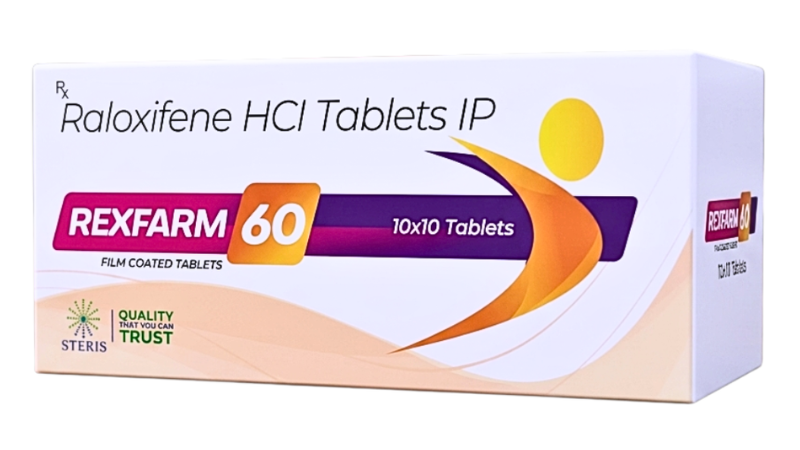



Raloxifene 60 mg Tablet: Uses, Benefits, Dosage, Side Effects, and Precautions
Jul 31, 2026
REXFARM 60 provides: Raloxifene Hydrochloride 60 mg, is a selective estrogen receptor modulator (SERM) and is used for both the prevention of postmenopausal osteoporosis and for the treatment of postmenopausal osteoporosis. It is also used to reduce the risk of invasive breast cancer in select postmenopausal women at high risk. Take one 60 mg tablet, by mouth, once daily and can be taken with or without food and is not a steroid.
What is Raloxifene 60 mg Used For?
Raloxifene 60 mg tablet, sold under the brand name REXFARM 60 by Steris Healthcare, belongs to a class of medicines called Selective Estrogen Receptor Modulators (SERMs). Unlike traditional hormone therapy, raloxifene mimics the beneficial effects of estrogen on bone tissue while blocking estrogen's effects on breast and uterine tissue.
Doctors primarily prescribe raloxifene 60 mg tablet uses for two major indications:
- Prevention and treatment of postmenopausal osteoporosis — helping maintain and improve bone mineral density.
- Reduction of invasive breast cancer risk in postmenopausal women with osteoporosis or those at high risk of breast cancer.
Because bone loss accelerates rapidly after menopause due to falling estrogen levels, raloxifene 60 mg is often part of a long-term bone health strategy for women in this stage of life.
Is Raloxifene 60 mg Safe to Take?
For most women who are postmenopausal, raloxifene 60mg offers good tolerability and safety in long term administration if taken under medical supervision. But no medications are always without risk and RALOXIFENE is not safe to take in any woman unless for her life at the dosage prescribed. Normally your physician will ask you medical records particularly and about a history of blood clot, liver disease, or vaginal bleeding if one happens and you must be prescribed by a doctor
REXFARM 60.RALOXIFENE HCl 60MG ARE NOT RECOMENEDED IN POSTMENOPAUSAL MEN, OR PREMENOPAUSAL WOMEN .
How Should I Take Raloxifene 60 mg?
The standard recommended dose is one 60 mg tablet taken orally once a day, at any time of day, with or without food. Consistency matters more than timing — try to take it around the same time each day to build a routine and avoid missed doses.
What Should I Do If I Miss a Raloxifene Dose?
If you miss a dose of REXFARM 60, take it as soon as you remember on the same day. If you don't remember until the next day, skip the missed dose and continue your normal schedule. Never double up on tablets to make up for a missed one.
Is Raloxifene a Steroid?
No. This is one of the most searched questions, so it's worth clarifying clearly: raloxifene is not a steroid. It is a Selective Estrogen Receptor Modulator (SERM) — a non-hormonal, non-steroidal compound that selectively acts on estrogen receptors in bone tissue while blocking estrogenic activity in breast and uterine tissue. This selective action is what makes it different from both steroids and standard hormone replacement therapy (HRT).
Does Raloxifene Improve Bone Density?
Yes. Clinical use of raloxifene has consistently shown it helps increase or maintain bone mineral density (BMD) in the spine and hip in postmenopausal women, which directly supports its role in osteoporosis prevention and treatment.
Can Raloxifene Reduce Fracture Risk?
Yes — by improving bone density and bone quality, raloxifene 60 mg is associated with a reduced risk of vertebral (spinal) fractures in postmenopausal women with osteoporosis. It has not shown the same strength of evidence for reducing hip or non-vertebral fracture risk compared to some other osteoporosis medications, which is a key discussion point to have with your doctor.
What Are the Benefits of Raloxifene?
The core benefits associated with raloxifene 60 mg tablet include:
- Helps prevent and treat postmenopausal osteoporosis
- Supports bone mineral density
- May lower the risk of invasive breast cancer in high-risk postmenopausal women
- Does not stimulate the uterine lining, unlike some hormone therapies (lower endometrial cancer concern compared to tamoxifen)
- Non-steroidal, non-hormonal alternative for long-term bone care
- Taken conveniently as a once-daily oral tablet
Common Reactions and Side Effects of Raloxifene 60 mg
Every medicine can cause side effects, though not everyone experiences them. Common reactions reported with raloxifene 60 mg side effects include:
- Hot flashes (vasomotor symptoms)
- Leg cramps
- Joint pain
- Swelling in the hands, feet, or legs (peripheral edema)
- Flu-like symptoms
- Sweating
Serious but rare risks include an increased risk of blood clots (deep vein thrombosis and pulmonary embolism) and, in rare cases, stroke-related events in certain risk groups. Any unusual leg swelling, chest pain, shortness of breath, or sudden vision changes should be reported to a doctor immediately.
Does Raloxifene Make You Gain Weight?
This is a frequently asked concern. Based on general clinical experience, raloxifene is not typically associated with significant weight gain as a primary side effect. Some women may notice mild fluid retention or swelling (edema), which can feel like weight gain, but this is different from actual fat or muscle weight gain. If you notice unexplained or rapid weight changes while on REXFARM 60, discuss it with your healthcare provider rather than adjusting your dose on your own.
Does Raloxifene Affect Cholesterol Levels?
Yes, raloxifene has been observed to have a favorable effect on lipid profiles in some studies — particularly by lowering LDL ("bad") cholesterol — although it is not prescribed specifically as a cholesterol-lowering medication. Any cardiovascular or lipid-related benefit should be considered secondary to its primary use in bone health.
Can Raloxifene Prevent Breast Cancer?
Raloxifene is approved for reducing the risk of invasive breast cancer in postmenopausal women who either have osteoporosis or are at high risk for breast cancer. It works by blocking estrogen receptors in breast tissue, which can slow the growth of estrogen-receptor-positive breast cancer cells. It is used as a risk-reduction strategy, not as a treatment for existing breast cancer, and should never replace regular breast cancer screening (mammograms) recommended by your doctor.
Is Raloxifene Suitable After Menopause?
Yes — raloxifene 60 mg is specifically designed and approved for use in postmenopausal women. It is not intended for premenopausal women, and its safety and effectiveness have not been established in that group.
Is Raloxifene Bad for the Kidneys?
Raloxifene is primarily metabolized by the liver, and there is limited data specifically on kidney impact in patients with normal renal function. However, caution is generally advised in patients with moderate to severe kidney impairment, and your doctor should evaluate your renal function before starting therapy, especially if you have pre-existing kidney disease. Never adjust dosage without medical supervision if you have known kidney concerns.
Who Should Avoid Taking Raloxifene?
REXFARM 60 (raloxifene 60 mg) is not suitable for:
- Premenopausal women
- Women who are pregnant or may become pregnant
- Breastfeeding mothers
- Individuals with a current or past history of venous thromboembolism (blood clots), including DVT, pulmonary embolism, or retinal vein thrombosis
- Women with unexplained uterine bleeding
- Patients with severe liver impairment
- Men (raloxifene is not approved or indicated for male use)
What Happens If a Male Takes Raloxifene?
Raloxifene is not approved for use in men. It is specifically formulated and studied for postmenopausal women. Men should not take this medication for bone density, hormonal, or any off-label purpose without explicit medical supervision, as its safety profile in men has not been established, and unsupervised use could lead to unpredictable hormonal effects. If a male has accidentally consumed this medication, contact a doctor or poison control promptly.
Do I Need to Take Calcium with Raloxifene?
Yes, calcium and vitamin D supplementation is commonly recommended alongside raloxifene therapy, especially if your diet does not provide adequate levels. Since raloxifene works on bone density but does not independently supply the building blocks bones need, doctors often advise:
- Adequate dietary calcium intake or supplementation (as advised by your doctor)
- Vitamin D supplementation to support calcium absorption
- Weight-bearing exercise to further support bone strength
Can Raloxifene Be Taken with Calcium and Vitamin D?
Yes, raloxifene is commonly co-prescribed with calcium and vitamin D supplements, and there is no known harmful interaction between them. In fact, this combination is often part of a standard osteoporosis management plan.
What Foods Should Be Avoided While Taking Raloxifene?
There are no major specific food restrictions with raloxifene, but general precautions include:
- Avoid excessive alcohol consumption, as it can affect liver metabolism of the drug
- Maintain a balanced diet rich in calcium (dairy, leafy greens) and vitamin D
- If you take cholestyramine or other bile acid sequestrants, space out dosing, as these can significantly reduce raloxifene absorption — always inform your doctor of all medications and supplements you take
How Long Should a Patient Be on Raloxifene?
There isn't a single universal timeline — duration of raloxifene therapy is individualized based on bone density scans, fracture risk, and how well the patient tolerates the medication. That said, general clinical guidance includes:
How Long to Stay on Raloxifene for Osteoporosis?
Many women remain on raloxifene therapy for several years, often reviewed periodically (commonly every 1-2 years) with bone density scans (DEXA scans) to monitor effectiveness. Long-term studies have followed patients for up to 8 years with continued monitoring for safety and benefit.
How Long Can You Take Raloxifene Safely?
There is no fixed maximum duration; your prescribing doctor will periodically reassess your bone density, cardiovascular risk factors, and clot risk to decide whether to continue, adjust, or transition therapy.
What Happens When You Stop Raloxifene?
If raloxifene is discontinued, its protective effect on bone density is not permanent — bone density may gradually begin to decline again toward pre-treatment levels over time, similar to what happens when other osteoporosis medications are stopped. This is why doctors typically discuss a long-term bone health plan rather than a short, fixed course, and may recommend transitioning to another therapy if raloxifene is stopped.
Never discontinue REXFARM 60 abruptly without consulting your doctor, especially if you're being treated for both osteoporosis and breast cancer risk reduction.
What is the Success Rate of Raloxifene?
Clinical research on raloxifene has generally shown meaningful improvements in bone density and a reduction in vertebral fracture incidence among postmenopausal women with osteoporosis, along with a notable reduction in invasive breast cancer incidence in high-risk groups. Actual "success" varies by individual depending on baseline bone density, age, adherence, and lifestyle factors like calcium intake and physical activity — so results should always be interpreted in the context of your personal DEXA scan results and your doctor's assessment.
Is Raloxifene Better Than Other Osteoporosis Medicines?
Raloxifene is one of several options for osteoporosis management, alongside bisphosphonates (like alendronate), denosumab, and hormone therapy. It is not necessarily "better" or "worse" — it's a different mechanism with a distinct benefit profile:
- Raloxifene: Good for spinal bone density and breast cancer risk reduction; less proven for hip fracture reduction
- Bisphosphonates: Broader fracture risk reduction across spine and hip, different side-effect profile
- Hormone therapy: Broader menopausal symptom relief but different long-term risk considerations
Your doctor will choose based on your fracture risk profile, breast cancer risk, other health conditions, and personal preference.
What Can I Take Instead of Raloxifene? (Alternatives to Raloxifene 60 mg)
If raloxifene isn't suitable for you, alternatives your doctor may consider include:
- Bisphosphonates (alendronate, risedronate, zoledronic acid)
- Denosumab (injectable biologic therapy)
- Teriparatide or other bone-forming agents for severe osteoporosis
- Hormone replacement therapy (HRT), in select cases
- Calcium and vitamin D optimization combined with lifestyle changes, in early or mild bone loss cases
The right alternative depends entirely on your fracture risk, breast cancer risk profile, and overall health — this decision should always be made with your physician.
REXFARM 60 — Additional Information You Should Know
A few practical details that are often left out of standard patient leaflets but are genuinely useful:
- Storage: Store REXFARM 60 tablets at room temperature, away from moisture and direct sunlight, and keep out of reach of children.
- Drug interactions: Inform your doctor about all medicines you're taking, particularly blood thinners (like warfarin), cholestyramine, and other estrogen-containing products, as these can interact with raloxifene.
- Before surgery: Because of the clotting risk, doctors often recommend stopping raloxifene several days before any planned surgery or prolonged periods of immobility (like long flights), then resuming once mobility is restored — always follow your doctor's specific instructions.
- Regular monitoring: Periodic bone density (DEXA) scans and clinical check-ins are recommended to track how well the medication is working for you.
- Not a same-day fix: Raloxifene's bone-protective benefits build up gradually over months, not days — consistency in daily dosing matters more than any single dose.
Frequently Asked Questions (FAQ)
What is raloxifene 60 mg prescribed for?
It is prescribed for the prevention and treatment of osteoporosis in postmenopausal women and to reduce the risk of invasive breast cancer in certain high-risk postmenopausal women.
How many times a day should raloxifene be taken?
Once daily, as one 60 mg tablet, with or without food.
Can raloxifene 60 mg help osteoporosis?
Yes, it is specifically indicated for both the prevention and treatment of postmenopausal osteoporosis by supporting bone mineral density.
What is the recommended dose of raloxifene?
The standard recommended dose is 60 mg (one tablet) once daily.
About REXFARM 60 by Steris Healthcare
REXFARM 60 (Raloxifene Hydrochloride 60 mg Tablet) is manufactured and marketed by Steris Healthcare, committed to providing quality, accessible pharmaceutical solutions for women's bone and reproductive health across India. As a raloxifene 60 mg brand name trusted by prescribing physicians, REXFARM 60 aims to combine affordability with consistent pharmaceutical quality.
Medical Disclaimer
This article is intended for general informational and educational purposes only and does not constitute medical advice. Raloxifene (REXFARM 60) is a prescription-only medicine. Do not start, stop, or change your dose without consulting a qualified healthcare professional. Individual results and side effects can vary. Always read the package insert and follow your doctor's specific instructions.
Recent Post
Olanzapine 2.5 mg: Uses, Benefits, Dosage, Side Effects, and Precautions
Montelukast 10mg, Levocetirizine 5mg, Ambroxol 75mgSR– उपयोग, लाभ, डोज़ और सावधानियां
empagliflozin and metformin hydrochloride tablets in Hindi | टाइप 2 डायबिटीज के लिए प्रभावी उपचार
Dorzolamide Eye Drops: Uses, Benefits, Dosage & Side Effects – CIPVISION DORZONIX
Epalrestat 150 mg Uses in Hindi – फायदे, खुराक और सावधानियां
Loteprednol Etabonate Ophthalmic Suspension – Complete Guide to Uses, Dosage & Precautions
Carboxymethylcellulose Eye Drops Uses in Hindi: सूखी, थकी आंखों का असरदार इलाज
Pyridostigmine 60 mg (PDOSTIGAMIN 60): Uses, Benefits, Dosage & Side Effects
Clindamycin Nicotinamide Gel – Uses, Benefits, Dosage, Side Effects & Buy Online
Tobramycin Eye Ointment – Uses, Benefits, Dosage, Side Effects & Buy Online